Pillar Guide
The Complete Guide to Dog Digestive Health: Probiotics, Sensitive Stomachs & Natural Gut Relief
A UK/USA guide to the canine microbiome — how the gut works, what breaks it, and how diet, probiotics, and lifestyle rebuild it.
Educational content — not veterinary advice
Information on this page is general guidance only and does not replace diagnosis or treatment by a licensed veterinarian. Always work with your vet before making condition-related dietary changes.
1. Introduction: the gut-health wake-up call
My name is Neil, and I'm the founder of Well Fed Paws. When my dog Alfie started having digestive issues — soft stools, occasional vomiting, and a gurgling stomach that kept us both awake — I thought it was just "a sensitive stomach". The vet prescribed bland diets and antibiotics. Things improved, then relapsed. The cycle kept repeating.
What I didn't know then is that every course of antibiotics wipes out the beneficial bacteria along with the bad. Alfie's gut was stuck in a loop of destruction and incomplete recovery.
I spent months reading the canine microbiome literature. The gut is not just about digestion — it is the control centre for immunity, inflammation, and even mood. This guide is what I wish someone had handed me on day one.
2. Understanding the canine digestive system
Your dog's digestive tract runs from mouth to anus as a multi-stage processing plant.
- Stomach: highly acidic environment that kills pathogens and begins protein breakdown.
- Small intestine: where most nutrient absorption takes place.
- Large intestine (colon): water absorption and fermentation of fibre by gut bacteria.
- Microbiome: the trillions of bacteria, fungi, and viruses living in the gut — outnumbering the dog's own cells.
The "leaky gut" problem. When the gut lining is damaged by poor diet, antibiotics, chronic stress, or toxins, the tight junctions between cells loosen. Undigested particles and bacterial products slip into the bloodstream, driving systemic inflammation, allergies, and autoimmune reactions.
3. Common digestive problems
A. Acute diarrhoea
Sudden, watery stools from dietary indiscretion (scavenging on walks), stress, or a mild infection. Usually resolves in 24–48 hours.
B. Chronic diarrhoea
Loose stools lasting more than two weeks. Often linked to IBD, food allergies, or exocrine pancreatic insufficiency (EPI).
C. Gastric dilatation-volvulus (bloat)
A life-threatening emergency where the stomach distends and twists. Distended abdomen plus unproductive retching means go to the vet immediately.
D. Exocrine pancreatic insufficiency (EPI)
The pancreas stops producing digestive enzymes. Dogs eat well but lose weight. Common in German Shepherds. Requires enzyme replacement therapy.
E. Inflammatory bowel disease (IBD)
Chronic, immune-mediated inflammation of the gut. Diet modification, probiotics, and (sometimes) immunosuppressants are the mainstay treatments.
F. Anal gland issues
Soft stools that don't naturally express the anal sacs cause inflammation and impaction. Firm, well-formed stools are the best prevention.
4. Signs your dog has a gut problem
- Inconsistent stool quality — alternating between firm and soft.
- Excessive gas — a classic sign of malabsorption or dysbiosis.
- Stomach gurgling that correlates with discomfort.
- Licking the floor or lip smacking — often signs of nausea.
- Scooting — anal gland irritation from soft stool.
- Weight loss with good appetite — suggests malabsorption.
- Bad breath — can originate from the gut, not just the teeth.
- Itchy paws or recurrent ear infections — gut inflammation often shows up on the skin.
5. When to see a vet vs. when to support at home
See a vet immediately for
- Blood in stool (fresh red or dark, tarry).
- Repeated vomiting that prevents water intake.
- A bloated, tender abdomen (suspected bloat).
- Lethargy or fever alongside digestive signs.
Home support is reasonable when
- Your dog has mild, intermittent soft stools and is otherwise bright.
- The vet has ruled out parasites and infection.
- Your dog is finishing a course of antibiotics.
- You're transitioning to a new food.
6. The science of probiotics, prebiotics & postbiotics
Probiotics (live bacteria)
Strains with the strongest canine evidence base include:
- Enterococcus faecium — well-studied for canine diarrhoea.
- Bifidobacterium animalis — helps stabilise the large intestine.
- Lactobacillus acidophilus — produces lactic acid and lowers gut pH.
- Saccharomyces boulardii — a yeast probiotic that tolerates antibiotics.
Look for micro-encapsulated or spore-forming strains (such as Bacillus coagulans) — they're more likely to survive stomach acid.
Prebiotics (food for probiotics)
Non-digestible fibres — inulin, FOS (fructo-oligosaccharides), MOS (mannan-oligosaccharides) — that feed beneficial bacteria and help them colonise.
Postbiotics (metabolites)
The by-products of fermentation — short-chain fatty acids like butyrate. Butyrate is the primary energy source for colon cells and directly supports the gut lining.
7. Diet & nutrition for gut health
You are feeding the bacteria just as much as you are feeding the dog.
Foundations of a gut-friendly diet
- Single-source protein: helps isolate allergens. Novel proteins (duck, venison, rabbit) are less likely to trigger reactions.
- Highly digestible carbohydrates: pumpkin, sweet potato, white rice.
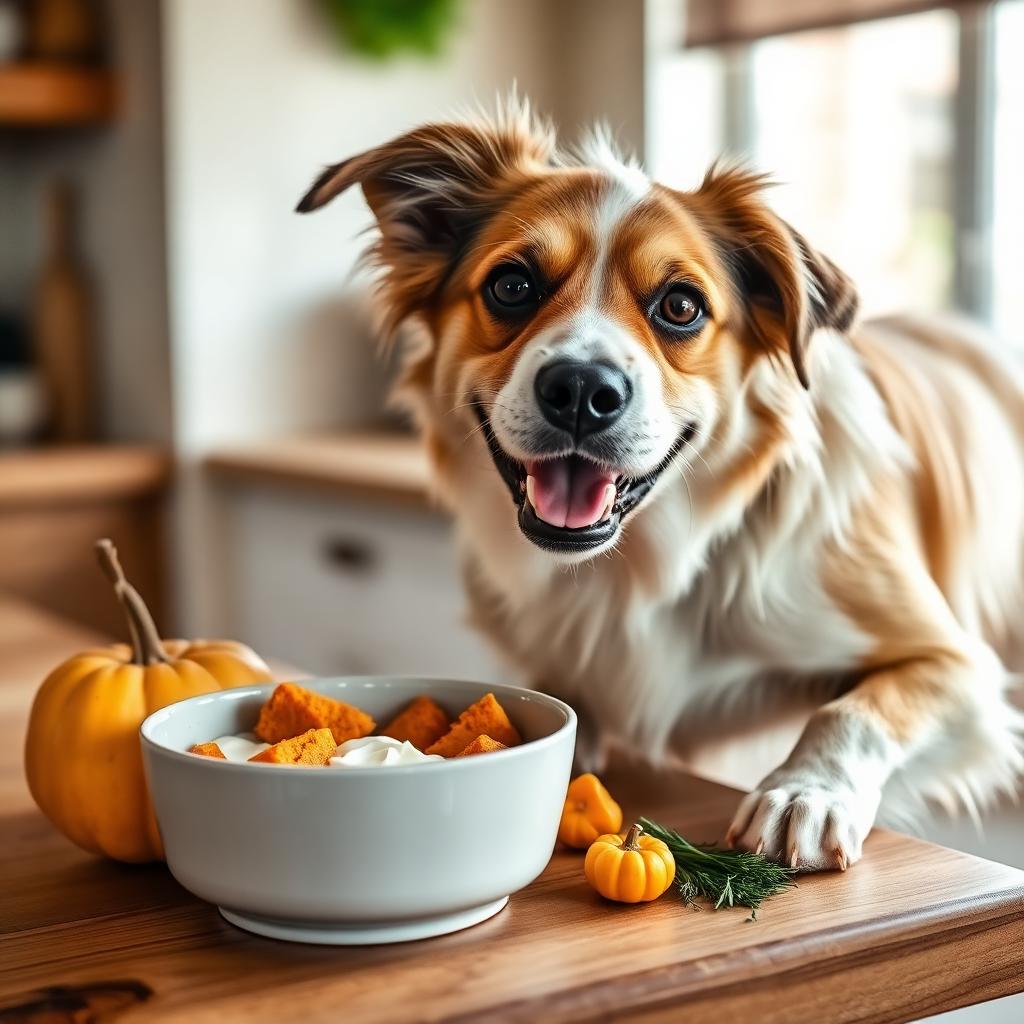
- Soluble fibre: plain pumpkin puree regulates water content in both directions.
- Omega-3 fatty acids: reduce intestinal inflammation.
Foods to limit
- High-fat meals (harder to digest, can trigger pancreatitis).
- Artificial preservatives (BHA, BHT, ethoxyquin).
- Common allergens in sensitive dogs — wheat gluten, corn, dairy.
The "gentle reset"
For mild acute diarrhoea, with vet approval:
- Withhold food for 12–24 hours; water always available.
- Introduce a bland diet: 50/50 boiled chicken breast and white rice.
- Add a teaspoon of plain pumpkin puree (never pie filling).
- Slowly transition back to normal food over 4–5 days, with a probiotic.
8. Natural home remedies
- Pure canned pumpkin — soluble fibre; 1 tsp (small) to 2 tbsp (large) daily.
- Bone broth — gentle, hydrating, onion- and garlic-free only.
- Slippery elm bark — coats and soothes the gut lining.
- Ginger — mild anti-nausea; a pinch for large dogs only.
- Unfiltered apple cider vinegar — a teaspoon in a large dog's water; avoid in dogs with kidney disease.
9. Lifestyle factors that affect digestion
- Stress: high cortisol reduces gut blood flow and alters the microbiome. Anxious dogs get diarrhoea.
- Eating speed: gobbling causes aerophagia (swallowed air) — use a slow-feeder bowl.
- Exercise timing: don't run your dog immediately after eating; wait at least an hour.
- Water quality: heavily chlorinated water may disrupt sensitive dogs; filtered is preferable.
10. Final thoughts
Alfie's digestive issues settled within a few weeks of a consistent gut-support routine. His coat got shinier, his energy improved, and — surprisingly — his anxiety softened too. The gut-brain connection is real.
Your dog's digestive health is the foundation for everything else. If they can't absorb nutrients, they can't build muscle, repair cartilage, or fight off infection. Start with the gut. The rest follows.